Labor stands with survivors as abuse allegations emerge
By Sheri Williams
The American labor movement, confronting a painful reckoning, is responding swiftly and decisively to allegations of sexual abuse against César Chávez—one of the most celebrated figures in U.S. labor history.
Its message is clear: no legacy, however towering, stands above accountability for survivors.
The allegations against Chávez emerged in a New York Times investigation published recently, which named three women, including UFW co-founder Dolores Huerta, who said Chávez used his position of power to sexually assault them.
The other two women, daughters of labor leaders, told the Times they were abused as girls. The allegations, some of which had circulated as rumors for years, immediately ignited widespread outcry. Dozens of California leaders, from local school board members to state lawmakers, called for Chávez’s name to be removed from parks, schools, streets, libraries, and community events. The UFW announced it would not participate in any events named after its former leader.
“My heart aches for everyone who suffered alone and in silence for years,” Huerta said in a statement. “There are no words strong enough to condemn those deplorable actions that he did. César’s actions do not reflect the values of our community and our movement.”
Huerta’s voice carries singular weight in this moment. Having stood beside Chávez for decades, helped build the movement he is credited with leading, and now come forward as one of his accusers, her statement cuts to the core of what accountability requires.
“The farmworker movement has always been bigger and far more important than any one individual,” Huerta said. “César’s actions do not diminish the permanent improvements achieved for farmworkers with the help of thousands of people.”
United Farm Workers President Teresa Romero described the rape allegations as “very difficult to hear,” and said they were “not something the organization expected.”
But she did not hesitate in her response. “We do not condone the actions of César Chávez,” Romero said in an interview with CalMatters. “It’s wrong.”
She urged the public to respect the women who came forward and give them “the space they deserve to process this.”
That kind of swift institutional accountability reflects a broader shift in how the labor movement is choosing to respond when confronted with abuse allegations—even against its own icons.
The Sacramento Central Labor Council issued a formal statement of solidarity, making clear that the principles underlying the labor movement demand exactly this response.
“Our movement is built on the belief that every worker deserves dignity, respect, and safety both on the job and in our organizations,” SCLC executive director Fabrizio Sasso said. “When women come forward with experiences of harm, their voices must be taken seriously. Survivors deserve to be heard and treated with compassion and respect.”
The labor movement, which has long fought for the dignity of working people, is now being asked to demonstrate that those values apply universally, without exception.
“At its core, the labor movement has never been about elevating one individual,” Sasso said. “It has always been about working people standing shoulder to shoulder to demand dignity and power in their workplaces and communities. The legacy of the farmworker movement belongs to the thousands of workers who organized in the fields, marched in the streets, and sacrificed for a better future for their families.”
That message—that the cause is larger than any one person—is what solidarity demands in this moment, Sasso added. Chávez was a singular force in American history. He co-founded the UFW, led national boycotts, and spent decades fighting for the rights of some of the most exploited workers in the country. But none of it erases what his accusers experienced, or their right to have their stories heard, he said.
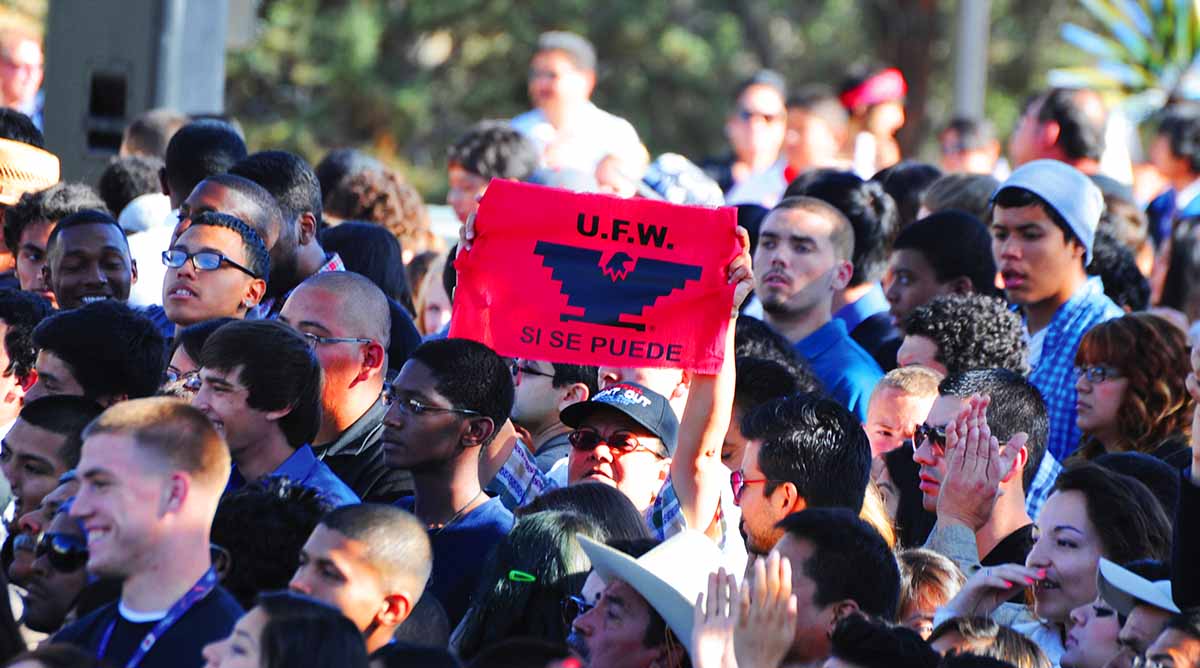
Even as this reckoning unfolds, the farmworker movement is continuing its fight for fair wages and better working conditions. On what was César Chávez Day, now renamed Farmworkers Day, House Democratic Leader Nancy Pelosi acknowledged the movement’s enduring importance, writing that the farmworker movement “moved America forward—winning better wages and a more just future.”
Senator Alex Padilla reaffirmed his commitment to farmworker rights, calling them “the backbone of our economy.”
The Sacramento Central Labor Council concluded its statement with a commitment to keep organizing for fair wages and safe workplaces, “holding ourselves and our movement to the highest standards of integrity and respect. The fight for worker justice must always be rooted in dignity for all.”